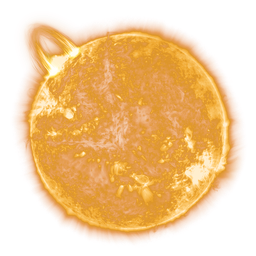
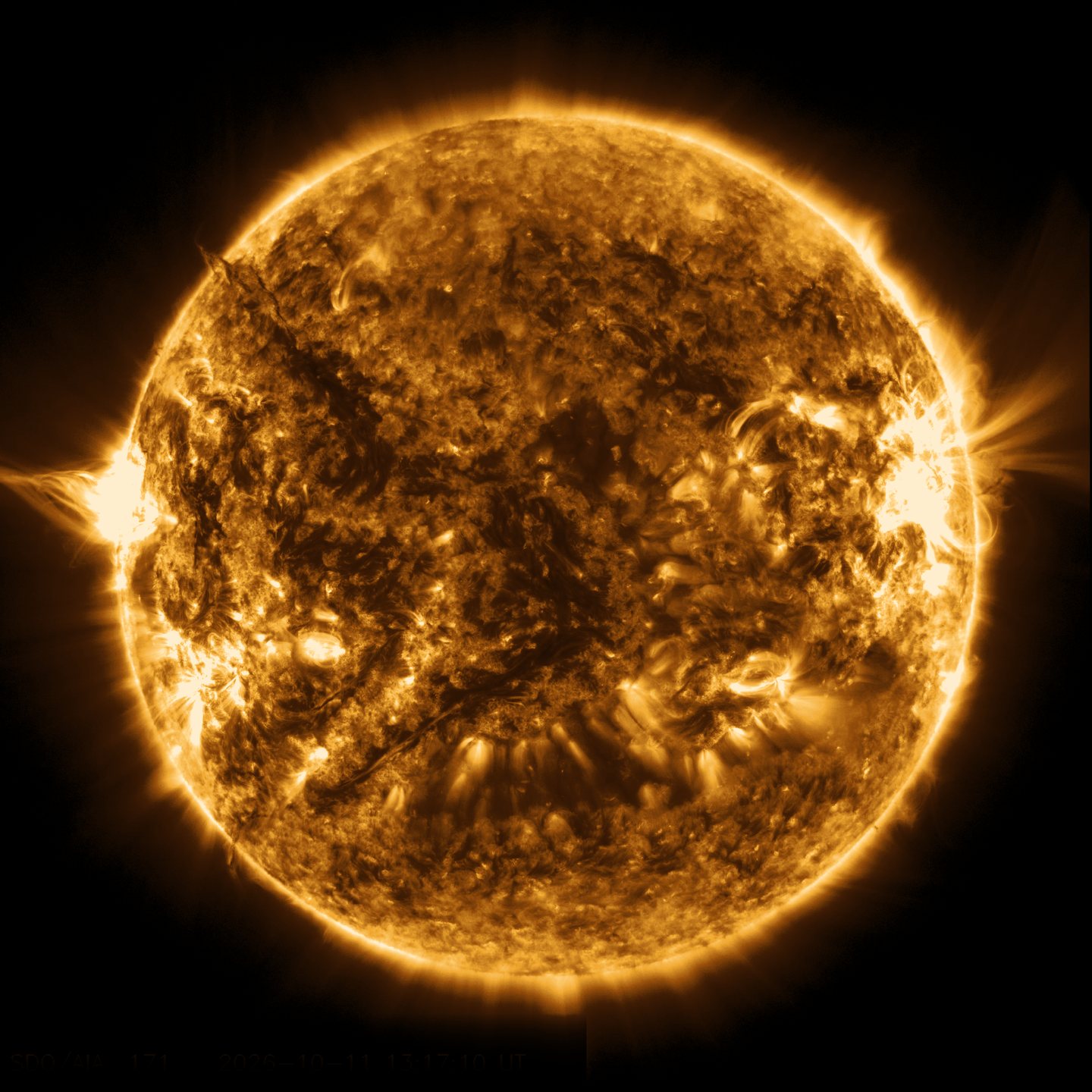
The first on-chain record of the Sun.
Every 60 seconds a crank reads two public instruments and posts what they saw to a Solana program: the X-ray class of that minute from NOAA’s GOES satellite, and the SHA-256 of NASA’s newest SDO frame. Anyone can download the same files and get the same numbers. Three things run on that record.
Live: the GOES class and the oracle’s newest frame hash. Replayed: the last seven days of real flares, one every few seconds. On Solana: posted at launch.
Oracle tape
One record a minute from NOAA’s GOES feed and NASA’s and NOAA’s newest frames, chained by hash. Read the API.
Solar randomness. Each frame’s hash is a random number nobody can predict, because the plasma is turbulent, and anyone can check, because the frame is public. Plates draw on it, and any Solana program can read it.
Sunburn
Creator fees from pump.fun collect in a burn vault. When the oracle records a flare at M1.0 or above, the vault buys $FLARE and burns it, sized by the flare’s peak: one unit per M1, and one unit is 1% of the vault, capped at 50%. An M1.0 burns 1%, the M6.4 of 10 October 6.4%, an X1 10%. The Sun decides when supply shrinks.
Flares: NOAA SWPC GOES flare list. Burns start at launch; until then every flare ≥ M1 is logged with the share it would burn.
Write with the Sun.
A plate is cut from the exact NASA frame the oracle posted, and its rarity is the oracle’s class for that minute. Write a line: its hash, with your wallet and the previous plate, picks the spot on the disk. The plate develops in the tray, then you print it: wavelength, framing, mount and your own line. It gets a number and keeps a page forever.
Reference prints from NASA SDO frames of 10 and 11 October 2026, one per wavelength, to show what a plate looks like. They are not plates: the real ones are in the ledger.
Your bag sets your wavelengths.
Everyone exposes in 171 Å, the gold of the quiet corona. Bigger bags unlock the other channels, each a different temperature of the same minute. Printing a plate in an extra wavelength, or minting it as a compressed NFT, burns $FLARE.
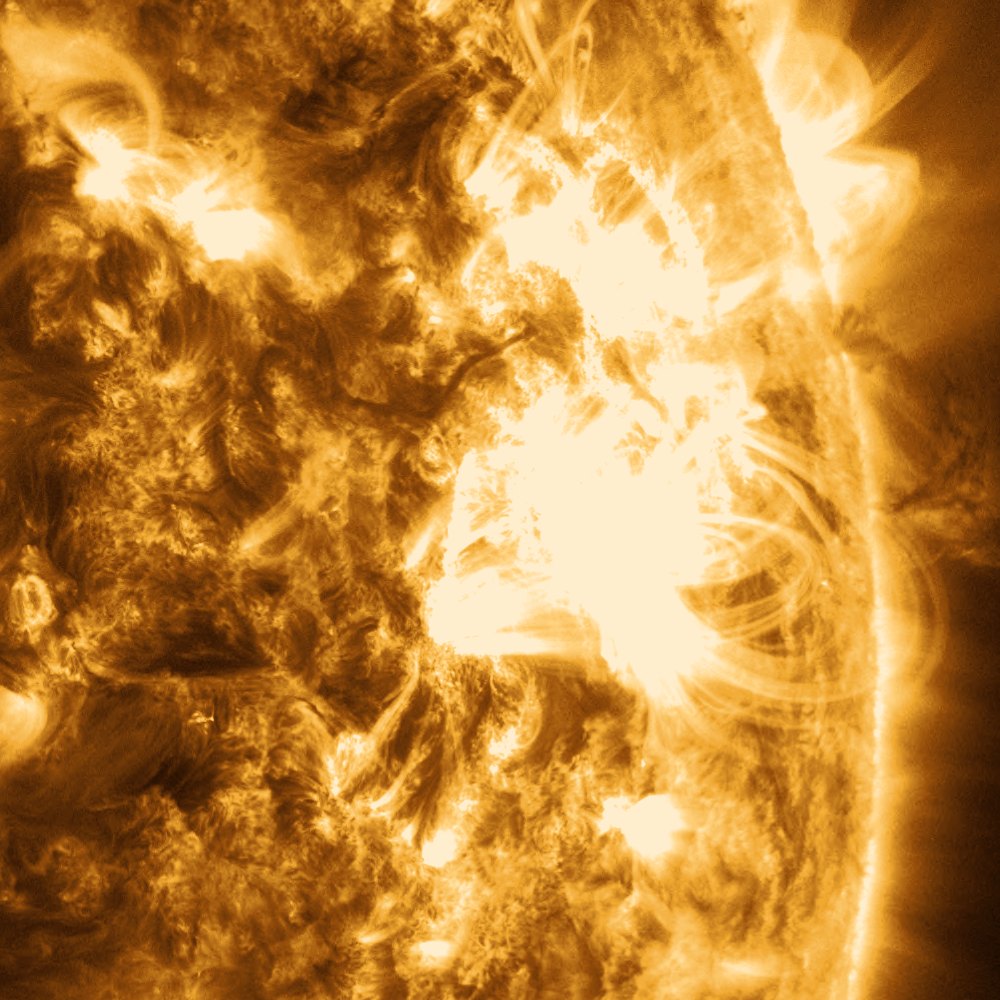
Your plate is an NFT.
- What it is
- A token in your wallet that points to one exact square of the Sun: the image our server cuts from the oracle’s frame, and its metadata.
- Why there is only one
- One exposure, one number. The spot comes from the hash chain (your line, your wallet, the plate before yours, the oracle’s minute), so nobody can pick it or cut it twice.
- Where it comes from
- The oracle posted the frame’s SHA-256 the minute it was taken: that proves which NASA or NOAA frame, and which second. Anyone can download the frame and re-cut the image to the same bytes.
- Where it trades
- Plates are compressed NFTs in the “FLARE Plates” collection, so they show in Phantom and trade on Tensor and Magic Eden.
- What it costs
- Minting burns $FLARE from your own wallet, in the one transaction you sign. The burn shrinks the supply; the plate is minted to you once it lands.
Minting opens at launch.
In 1826, Nicéphore Niépce coated a pewter plate with bitumen, pointed a camera out of his window and let the Sun do the work for hours, perhaps days. He called it heliography: sun writing. It is the oldest photograph that survives.
Two hundred years later, the chain is named after a beach whose name means “sunny place”, and its token is called SOL. The Sun itself has never been on it.
FLARE puts it there. Every plate is cut from a real image of the Sun taken minutes earlier, at the point your message chooses. How rare it is depends on the one thing nobody controls: what the Sun was doing that minute.
What the Sun was doing.
Rarity comes from the Sun.
A plate takes the X-ray class of the minute it was exposed. A and B are quiet, C is common, M is rare, X is legendary. Nobody can schedule a flare, so nobody can farm one.
When the flux crosses M1.0, a flare window opens for as long as the flare lasts and every holder may take one extra exposure. The bot posts one line: M6.4 · window open.
A plate whose square lands on a numbered active region, or on the limb where prominences hang off the edge, carries that too. And a few times a year the Moon slides between SDO and the Sun and takes a bite out of the frame. A plate cut from one of those minutes is mythic.
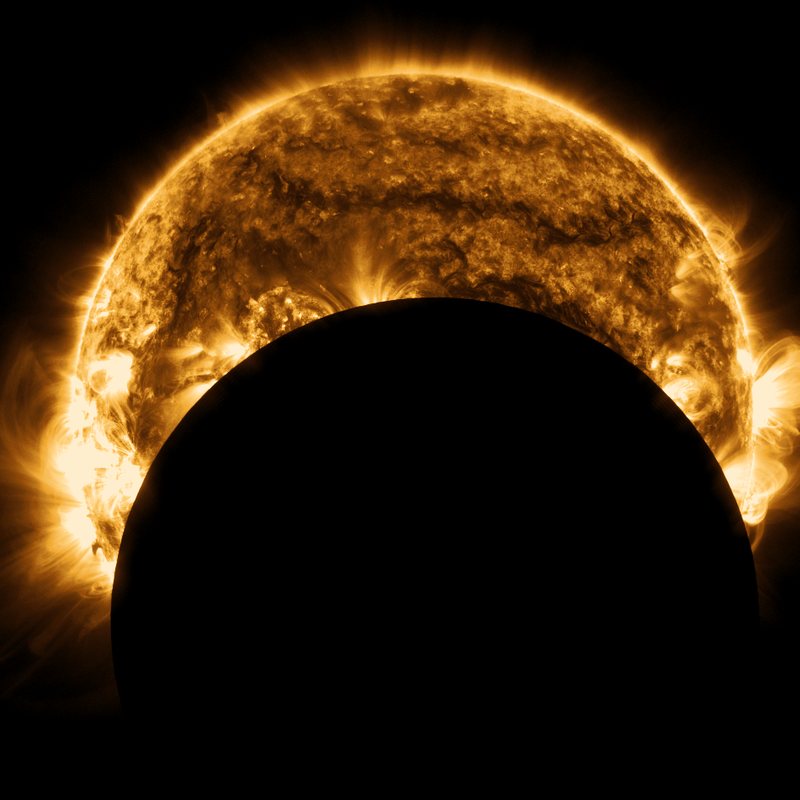
The Moon crossing SDO’s view.
25 Jul 2025 03:09:45 UTC · real frame, not a plate
Every M and X flare, forever.
Each one opens a window for every holder. The Sun passed the peak of cycle 25 in October 2024. Flares thin out toward the minimum around 2030, then cycle 26 builds again, and the plates follow it.
Ledger
Each plate’s seal is chained to the one before it, so the order can’t be rewritten. Every row links to its page and its proof.
No plates yet: take the first exposure.